Your Dream of Parenthood — Supported Every Step of the Way
Paramitha's fertility specialists combine advanced reproductive medicine with personalised, compassionate care — because every couple's journey to parenthood is unique.
Full
Couple Fertility Workup
OI · IUI
IVF · ICSI
Expert
Reproductive Specialists
Integrated
Fertility Counselling
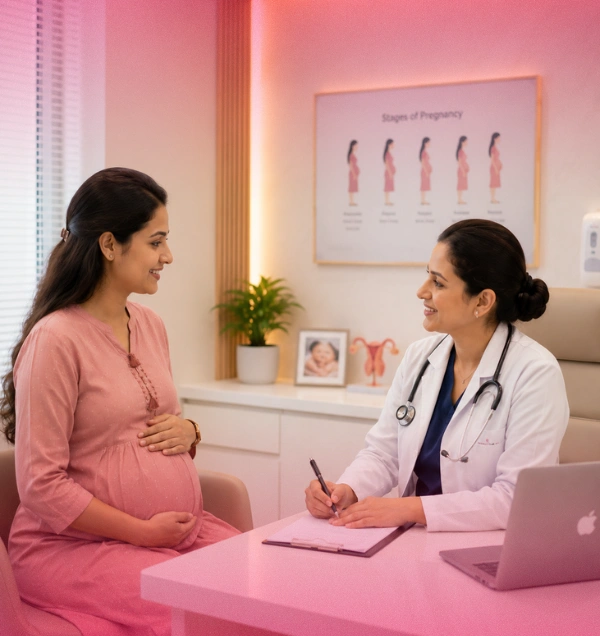
Paramitha Hospitals provides comprehensive fertility evaluation and treatment services in Hyderabad for couples experiencing difficulty conceiving. The fertility unit offers a complete diagnostic workup for both partners — including hormonal profiling (AMH, FSH, LH, testosterone, prolactin, thyroid), semen analysis with morphology, pelvic ultrasound for ovarian reserve assessment, and hysterosalpingography (HSG) for tubal patency evaluation. Treatment follows a stepwise, evidence-based approach beginning with the least invasive options: ovulation induction (OI) with timed intercourse, intrauterine insemination (IUI), in vitro fertilisation (IVF) with individualised stimulation protocols, and intracytoplasmic sperm injection (ICSI) for severe male factor infertility. All fertility treatments at Paramitha are conducted under the supervision of experienced reproductive medicine specialists and embryologists. Fertility counselling is integrated into the treatment programme to support the emotional wellbeing of couples throughout the process.
Understanding Infertility — You Are Not Alone
Infertility is defined as the inability to conceive after 12 months of regular, unprotected intercourse — or 6 months for women above 35. Approximately 1 in 6 couples globally experience infertility. In India, it affects an estimated 10–15% of couples of reproductive age.
Infertility is a medical condition — not a personal failing. With systematic evaluation and appropriate treatment, many couples who were struggling to conceive go on to have healthy pregnancies. Female factor only accounts for ~35% of cases, male factor only ~30%, combined factors ~20%, and unexplained ~15%. A fertility evaluation that does not include thorough male assessment is incomplete.
When Should You See a Fertility Specialist?
- Under 35: seek consultation after 12 months of trying without conception.
- Over 35: seek evaluation after 6 months — do not wait a full year.
- Seek earlier if: known PCOS, endometriosis, irregular cycles, prior miscarriages, male partner with low sperm count, or prior cancer treatment.
The Fertility Evaluation — What to Expect
Female Fertility Evaluation
Hormonal blood panel on day 2–3 includes AMH (ovarian reserve), FSH, LH, estradiol, prolactin, TSH, and androgens. Pelvic ultrasound assesses antral follicle count, uterine anatomy, and ovarian morphology. HSG evaluates uterine cavity shape and tubal patency. Hysteroscopy is offered where indicated.
Male Fertility Evaluation
Semen analysis assesses volume, concentration (≥16 million/mL), motility, morphology (Kruger strict criteria), and vitality. Abnormal results are repeated after 6–12 weeks. Additional investigations include hormonal assessment, scrotal ultrasound for varicocoele, and sperm DNA fragmentation testing where indicated.
Treatment Options — Step by Step
Step 1: Ovulation Induction (OI) with Timed Intercourse
Letrozole (first-line for PCOS) or clomiphene citrate stimulates follicle development, monitored with serial ultrasound. Injectable gonadotrophins are used when oral agents are insufficient.
Step 2: Intrauterine Insemination (IUI)
Prepared sperm is placed directly into the uterine cavity at ovulation. Success rates per cycle are typically 10–20%; cumulative success over 3–4 cycles is approximately 30–40%. Progression to IVF is recommended if IUI has not succeeded after 3–4 well-monitored cycles.
Step 3: In Vitro Fertilisation (IVF)
- Ovarian stimulation with injectable FSH, monitored by ultrasound and oestradiol.
- Egg retrieval under conscious sedation — same-day discharge.
- Fertilisation in the embryology laboratory; embryo culture to day 3 or day 5 blastocyst.
- Embryo transfer with luteal phase progesterone support.
- Surplus embryos vitrified for future frozen embryo transfer (FET) cycles.
Step 4: ICSI (Intracytoplasmic Sperm Injection)
A single sperm is injected into each mature egg — the treatment of choice for severe male factor infertility, prior fertilisation failure, or surgically retrieved sperm (PESA/TESA). ICSI fertilisation rates are typically 70–80% of injected oocytes.
IVF Success Rates — What to Know
Success rates vary significantly by female age — the single most important factor. Live birth rates per embryo transfer are approximately 40–45% for women under 35, declining to 10–15% above 40 using own eggs. Paramitha's fertility team presents honest, individualised success rate estimates based on your specific data.
OHSS Prevention & Fertility Counselling
Ovarian hyperstimulation syndrome (OHSS) risk is managed with individualised protocols, GnRH agonist triggers, freeze-all strategies in high-risk cycles, and close post-retrieval monitoring.
Fertility counselling supports couples through the emotional demands of treatment — including the two-week wait, failed cycles, and decisions about third-party reproduction. Counselling is a recommended component of fertility care at Paramitha.
Common Questions
Frequently Asked Questions
Quick answers to the questions patients ask us most often.
Book a fertility consultation at Paramitha Hospitals. Both partners should attend. A structured couple workup — hormonal blood tests, pelvic ultrasound, HSG, and semen analysis — will identify the cause in the majority of cases and guide the most appropriate treatment.